The future of safe and fast unloading
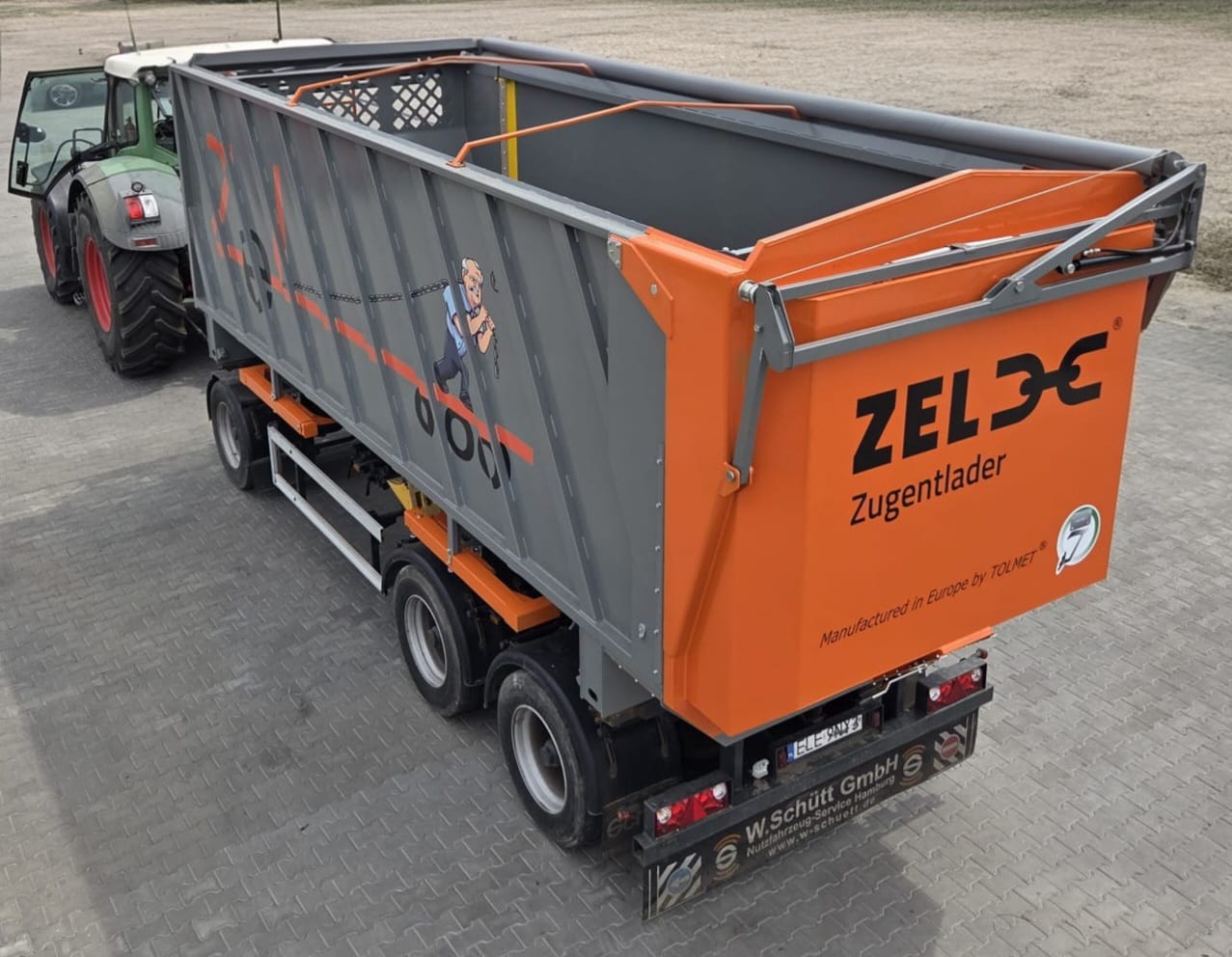
The Zugentlader pushes the load out of the container to the rear instead of lifting it. No tipping gear, no crane, no residue.
No tipping gear.
No crane.
No residue.
Containers today are mostly emptied by tipping, which requires lifting equipment such as cranes or hydraulic cylinders. The ZEL system works entirely without any such lifting gear.
A block and tackle instead of lifting gear
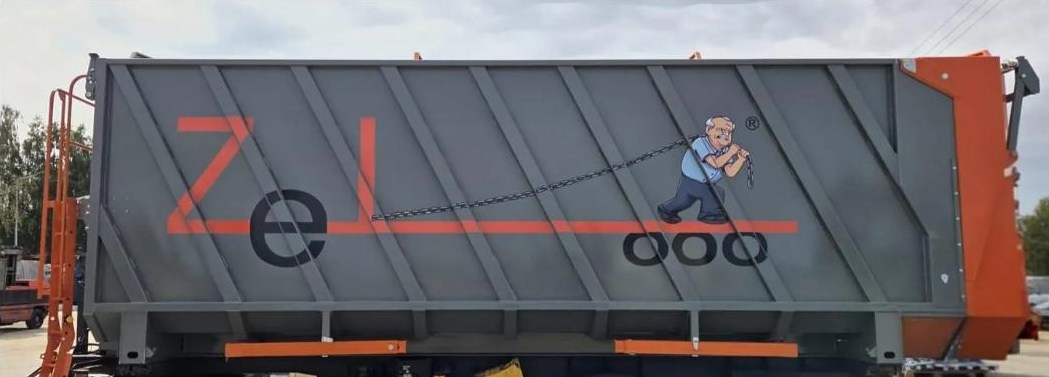
Instead of lifting the container, the ZEL system moves the front or intermediate wall towards the rear.
The ZEL system is based on the proven principle of the block and tackle. This greatly reduces the traction required to move a load. The block and tackle allows efficient force transmission and makes the system particularly powerful.
While containers are usually emptied by tipping, which calls for lifting systems such as cranes or hydraulic cylinders, the ZEL system needs none of that. Instead, the front or intermediate wall of the container is moved towards the rear by a block and tackle system.
The load is pushed evenly and under control towards the rear of the container and unloaded quickly, completely and almost without residue.
Even compacted or stuck material is reliably moved out of the container. Laborious manual assistance during unloading is no longer necessary.
- Block and tackle
- Greatly reduces the traction needed to move a load and allows efficient force transmission.
- Movable wall
- Compacts the material inside the container and pushes it evenly and under control towards the rear.
- No lifting
- Even compacted or stuck material is moved reliably. No manual assistance required.
What this means in daily operation
Conventional: tipping
- Lifting systems such as cranes or hydraulic cylinders are required.
- The dead weight of that lifting gear is subtracted from the payload.
- The vehicle must stand on firm, level ground to avoid the risk of tipping over.
- Stuck material calls for laborious manual assistance.
ZEL system: pulling
- No lifting gear. The principle is a block and tackle.
- Up to 1.5 tonnes less weight, which means more payload.
- The container is not lifted, so unloading stays safe and flexible even on difficult ground.
- Almost residue-free emptying, even with compacted material.
The movable wall compacts the material inside the container. This raises the fill density, so light and compressible materials such as household waste, bulky waste, glass wool or building rubble can be transported more efficiently. That increases transport capacity and reduces the number of trips required.
Our advantages
Eleven points that make the difference in daily use.
- Residue-free emptying
- Suitable for sticky materials
- Fast unloading
- Higher payload
- Less downtime
- No manual cleaning
- High occupational safety
- Safe on slopes
- Unloading possible at low headroom
- Ideal for mining and tunnelling
- Flexible control by panel, radio and app
Three ways to operate it
Panel
Operated directly at the vehicle via the permanently fitted control panel.
Radio
Control from a safe distance with a clear view of the discharge.
App
Operated from a mobile device, with no extra handset in the cab.
Planned sizes
Because the technology targets several industries, containers are planned in the following sizes.
| Version | Dimension | Status |
|---|---|---|
| Container | 20 ft | In planning |
| Container | 30 ft | In planning |
| Container | 40 ft | In planning |
| BDF swap body | to standard | In planning |
The sizes are still in planning. Binding dimensions, payloads and delivery dates are agreed in a personal conversation.
ZEL-WS GmbH brochure
Operating principle, efficiency, safety, environment, planned sizes and contact details on two pages. PDF, around 650 KB. German only.
From an invention to a system
Together with the Saarland inventor Ewald Wagner, Tobias Sorg has continuously developed the original ZEL system further and refined it into its present form.
That collaboration produced an unloading system that needs no lifting technology and brings unloading to places where conventional tippers reach their limits: low halls, uneven ground and material that is stuck inside the container.
Behind the system stands ZEL-WS GmbH, based in Unlingen in Upper Swabia. The ZEL Zugentlader is manufactured in Europe by TOLMET.
The chain motif in the logo stands for exactly this principle: pulled, not lifted.
Talk to us about your application
Would you like to see the ZEL system in action, do you have a technical question or are you interested in working together? Write to us.